“If there’s one message I want to share, it’s this: if you’ve had breast cancer and experience any new and unexplained symptoms – in my case back pain – insist on a referral to a specialist who can get you in for an MRI. Be proactive, be persistent, be demanding if you have to be.”
With an estimated 61,000 people in the UK currently living with metastatic breast cancer (Breast Cancer Now 2025), Cambridge’s Jane Horwood is sharing her story to raise vital awareness this Breast Cancer Awareness Month. Diagnosed with secondary cancer in her spine at the end of August, three days before her 67th birthday, the news came after five months of worsening back pain which eventually left her struggling to walk.
“I’d lifted a deadweight at the gym and initially thought it must be that; that it was muscular. I had an X-ray and that didn’t show anything, so I was reassured. But the pain just got worse, not better,” explains Jane, who explored every possible avenue to find the cause and a solution – GP visits, painkillers, physio, osteopathy, acupuncture, massage therapy, meditation, yoga.
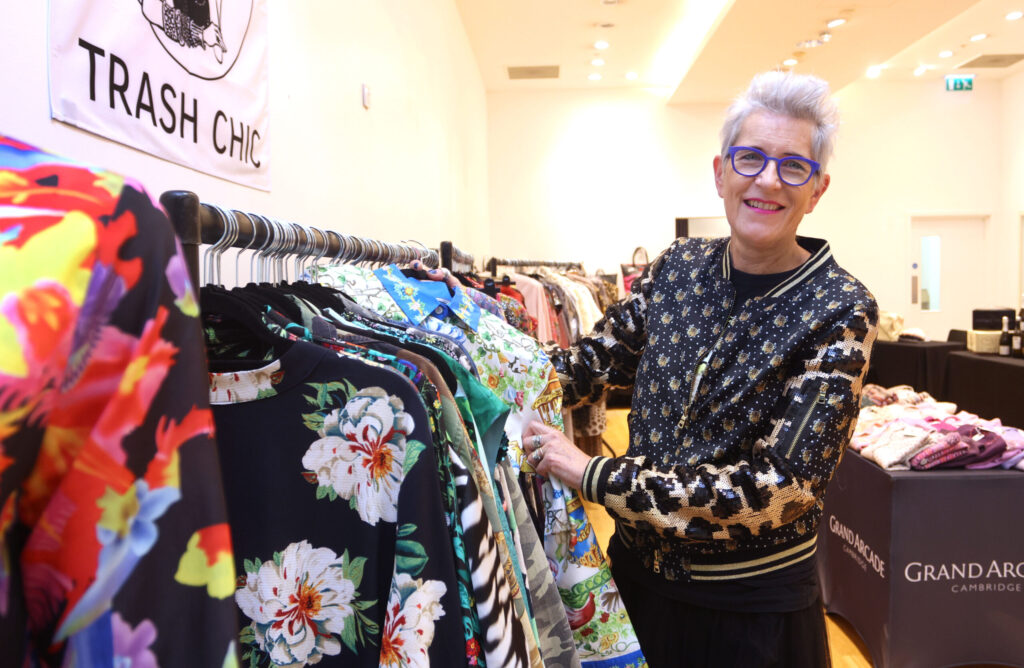
Founder of preloved fashion brand Trash Chic, Jane would usually be flying around sourcing stock and staging pop-ups, but by August, she was practically housebound. “I remember this one morning, a Tuesday morning, when I couldn’t get out of bed,” recounts Jane. “I was screaming, I was in agony. I mean I’d been struggling for a while, but that morning it was just hell. My husband, Robert, came up and said ‘What’s going on?’ and I said ‘It’s just crazy, I can’t stand it, there’s something not right at all’.”
Finally self-referring for an MRI, “the phone rang at 9am next morning and it was the doctor saying ‘You need to come down here’. Suddenly I was having this bombshell thrown at me: ‘Now it’s just a case of pain management, basically.’ I was like ‘What???’ – I could not believe it. When I got home I Googled ‘lower back pain + history of breast cancer + osteoporosis’ and what came up? Cancer of the spine with fractures. Had it not been for that MRI, I don’t know if or when the cancer would have been discovered.”
The MRI had revealed secondaries in Jane’s clavicles, spine, ribs and pelvis and three spinal fractures. When she was first treated for breast cancer in 2024, alerted by “this funny wrinkly patch on one boob”, no migratory cells were detected in her lymph nodes. When surgeons performed her lumpectomy, they excised the nearest nodes “just to be on the safe side really – it was very much a case of no stone left unturned”. Radiotherapy and medication followed. Making a good recovery and with a recent check-up mammogram coming back all-clear, “the cancer was honestly the last thing on my mind,” adds Jane.
“It’s hard not to feel angry when you see this disease stealing from people you love. But after Jo’s death and Jane’s diagnosis, I wanted to channel that energy into something positive – they’re both such positive people, they wouldn’t have it any other way.
“If I can give one practical piece of advice, it’s to take someone with you along to your appointments. Often they can see what you can’t see and they can advocate for you. I thought I’d made it very clear how much pain I was in, but when you’re in the middle of it and you’re exhausted, sometimes you need someone else to say: ‘Do you realise how bad this has got? Something’s really wrong.’”
As well as having radiotherapy and bone-strengthening drugs, Jane has opted into a trial. Needing to focus on her health, she’s made the difficult decision to close her fashion brand – Trash Chic, known for selling one-of-a-kind vintage, preloved and upcycled clothing. Wanting the business ‘to go out on a high and do some good too’, she is selling all her remaining stock and donating the proceeds to Addenbrooke’s Charitable Trust.
Taking place in the main mall of Cambridge’s Grand Arcade on Saturday 24 October, 10am to 5pm, all proceeds from the closing down sale will go towards supporting cancer services at Addenbrooke’s, including helping to build the new Cambridge Cancer Research Hospital.
With every piece sourced personally by Jane, a former fashion and graphic designer with an eye for cool and confidence-boosting clothing, shoppers can expect to find everything from faux furs and sequin kimonos to slogan tees and camo trousers. Adds Jane: “Organised by my friend Alice Ryan, editor of Velvet magazine, and hosted by the brilliant team at Grand Arcade, it’s a chance not only to support this important cause, but also to bag a real bargain: everything on the rails will be 50% off.”


The impetus to raise both funds and awareness was increased when, in the same week Jane received her diagnosis, a mutual friend of hers and Alice’s, Jo Thorndike, died suddenly and swiftly from secondary cancer. Like Jane, Jo previously had breast cancer, undergoing treatment in the early days of the pandemic. After developing abdominal pain in July, she ended up being admitted to hospital where tests revealed metastases in both her bones and organs. She died on August 26. She was 57.
“Jo was diagnosed with breast cancer seven years ago. It was devastating but in a strange, profound way, it also sharpened her perspective. It gave her the freedom to talk about what mattered… and she lived, really lived, with courage, humour and clarity,” her husband, Peter, says.
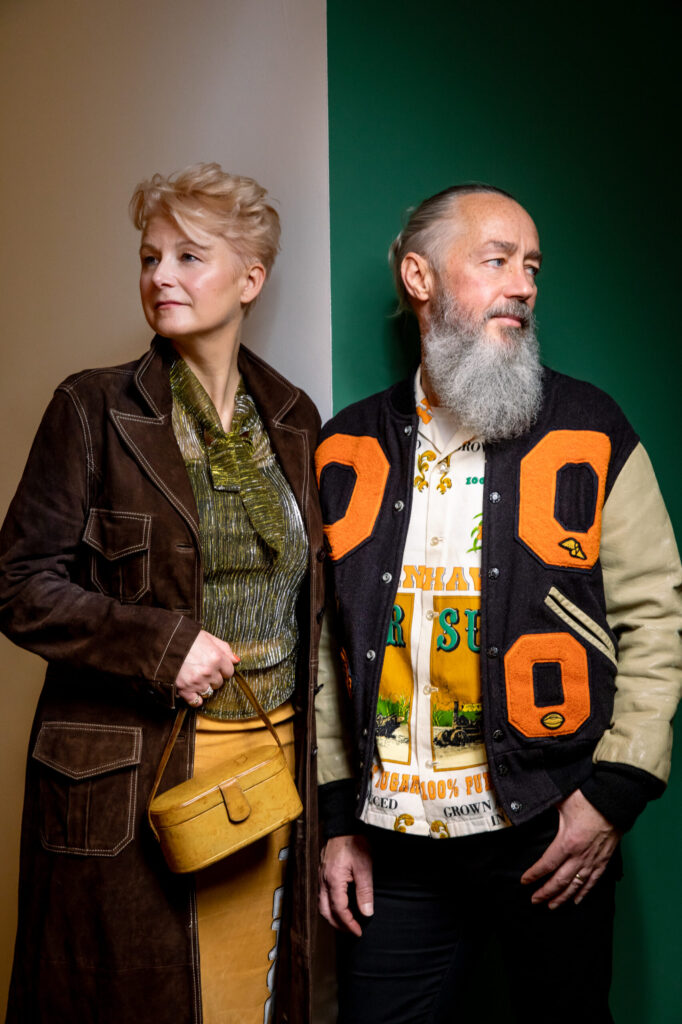
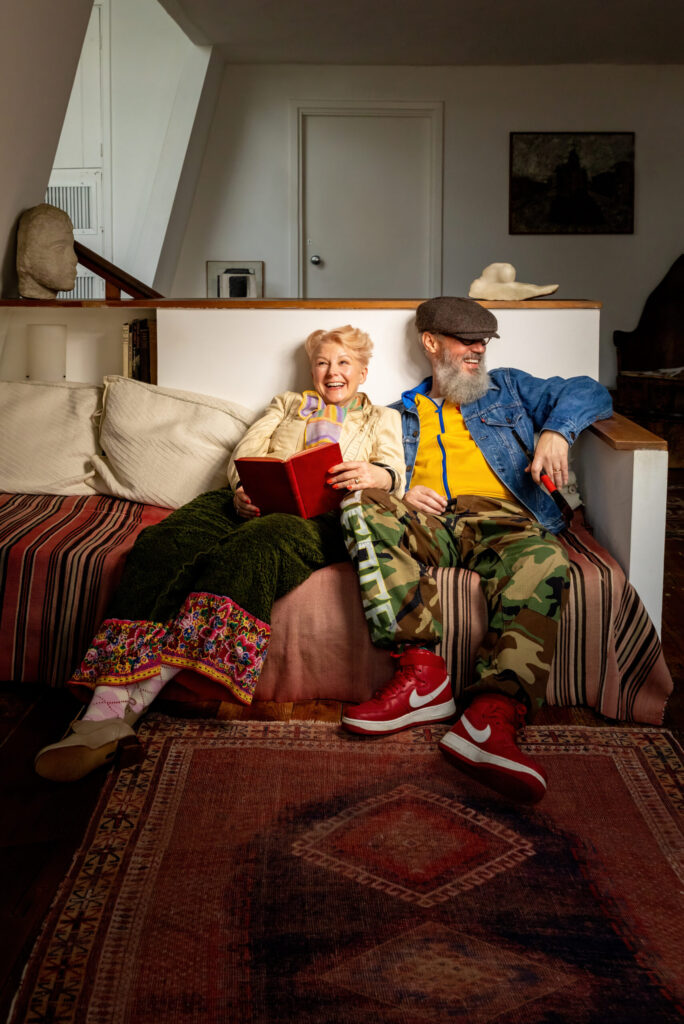
Alongside husband Peter, her partner of four decades, Jo was co-founder of art-meets-fashion brand Community of Creatives. She’d quit a corporate career to live a more creative life, first becoming a florist, then a stylist and, with Peter providing pop-art flair, an upcycler of preloved clothes. The venture took her and Peter to London Fashion Week with a group of students they’d mentored as part of an Oxfam project: the catwalk not only showcased planet-friendly fashion at its brightest and best, it gave confidence to young creatives just starting out. It was, says Peter, ‘pure Jo’.
“Jo was diagnosed with breast cancer seven years ago. It was devastating but in a strange, profound way, it also sharpened her perspective. It gave her the freedom to talk about what mattered… and she lived, really lived, with courage, humour and clarity,” he says.
“Jo would want to be remembered exactly as she was: passionate, feisty, loving, intuitive, bold, creative, generous and utterly herself. A woman who lived authentically and with intention. A woman who was beautiful and made things beautiful. A woman who loved deeply. A woman who changed the world around her in ways both quiet and dazzling.”
Says Alice: “I met both Jane and Jo through Velvet: their clothes have appeared many times in our shoots and Jo even modelled for one of our covers. Over time, both these women have become far more than contacts and collaborators; they’re my friends.
“It’s hard not to feel angry when you see this disease stealing from people you love. But after Jo’s death and Jane’s diagnosis, I wanted to channel that energy into something positive – they’re both such positive people, they wouldn’t have it any other way.
“Helping Jane to organise this fundraiser, and helping raise awareness of secondary cancer in the process, is the least I can do. None of this would be possible without the support of Jane’s amazing friends, dozens of whom are volunteering their time to help on the sale day, or without the team at Grand Arcade, who are generously hosting us in the main mall.”
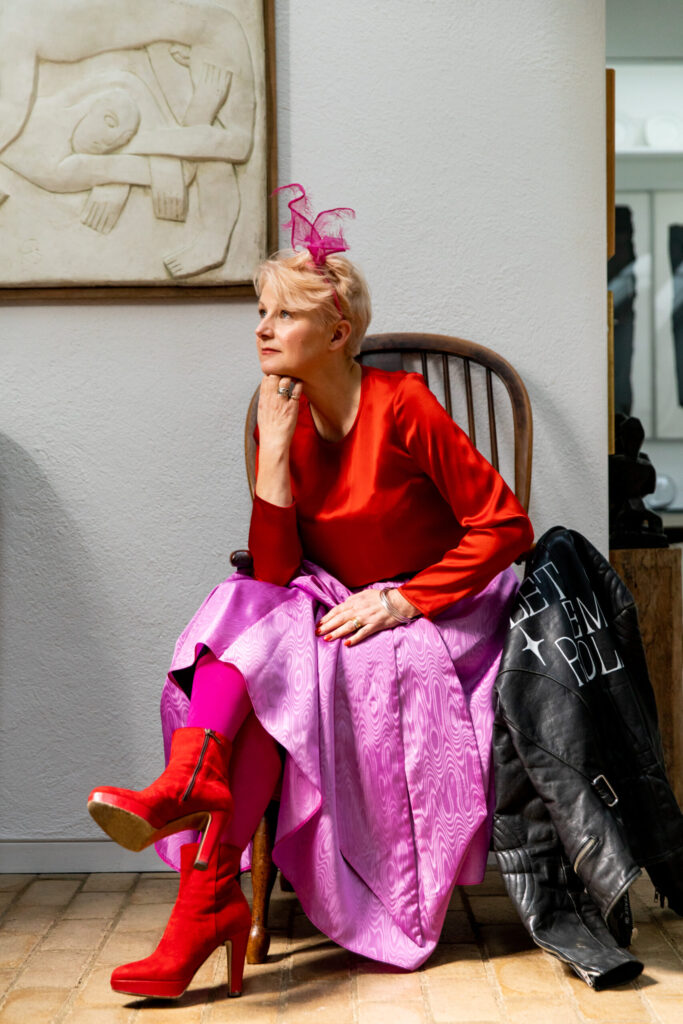
Jane’s seasonal Trash Chic pop-up shop has become a fixture at Grand Arcade over recent years. “Jane is part of the Grand Arcade family, so as soon as we heard about the charity sale we wanted to help,” says the centre’s marketing manager Julie Kervadec.
“Jane has an incredible eye and Trash Chic will really be missed. This final pop-up is a chance to buy something beautiful for your wardrobe at a bargain price, knowing you’re supporting an important cause in the process – what could be better?”
Breast cancer is the most common cancer in the UK. Around 59,400 people are diagnosed every year – that’s roughly 160 a day – and 1 in 7 UK women will be diagnosed with it at some point in their life (Beat Breast Cancer 2026).
“If there’s one message I want to share, it’s this: if you’ve had breast cancer and experience any new and unexplained symptoms – in my case back pain – insist on a referral to a specialist who can get you in for an MRI. Be proactive, be persistent, be demanding if you have to be.”
Addenbrooke’s Charitable Trust has proudly funded many breast cancer projects over its 30-year history, including a £1.2m grant to seed-fund Professor Jean Abraham’s research into a new approach to treating breast cancers. The groundbreaking Personalised Breast Cancer Programme is now a multi-site programme across several hospitals and has helped change the lives of over 1,000 patients. In 2025, Professor Abraham announced that a ground-breaking trial had led to 100% survival rates for patients taking part in the three-year trial – an incredible result that draws a direct line back to that early funding that was made possible by the charity’s extraordinary fundraisers.
As well as sophisticated groundbreaking research, Addenbrooke’s Charitable Trust has also supported everyday improvements for breast cancer patients, including wrapping mammography machines so that they are less daunting to patients undertaking scans. Recently, the charity has funded the SPY Portable Scanning Equipment project which is looking at the benefits of using tech in breast surgery, which, among other benefits, is reducing the risk of patients needing to return to theatre for repeat surgery, and additional sentinel lymph node accuracy which is used to indicate whether a cancer has spread.
Addenbrooke’s Charitable Trustcontinues to raise funds that transform cancer services today, as well as raising money to help build the new Cambridge Cancer Research Hospital. This new hospital will bring together world-leading cancer research and clinical care, helping to detect cancer earlier, develop more effective treatments, and improve outcomes for patients locally and around the world.
What: Trash Chic 50% off charity sale
Where: Main Mall, Grand Arcade, Cambridge
When: Saturday, October 24, 10am-5pm
Why: To raise money for Addenbrooke’s Charitable Trust in support of cancer services